

insects

Pharaoh Ant
Field Description Color Light yellow to brown Size 2 to 2.5 mm Shape Small and slender Larvae Appearance White, legless,

| Characteristic | Details |
|---|---|
| Color | Black with yellow thorax |
| Size | 1/2 to 1 inch |
| Shape | Large, robust body |
| Larvae Appearance | White, C-shaped |
| Common Locations | Wooden structures, decks, eaves |
| Egg Appearance | Small, oval, and laid in wooden holes |
| Primary Habitat | Forested areas, wooden homes |
| Life Cycle | Egg, Larva, Pupa, Adult |
| Also Known As | Wood Bee, Boring Bee |
| Quick Facts | Non-aggressive but cause wood damage |
| Signs of Infestation | Small round holes, sawdust piles |
| Preferred Diet | Nectar |
| Entry Points | Unfinished wood, exposed structures |

“Taking quick action when you notice signs of carpenter bee activity is essential to prevent further damage. Professional pest control services are the most effective way to ensure that carpenter bees are fully eradicated, and your home is protected.”
Structural Damage to Wood
“Minimal Sting Risks” – While stings are rare, female carpenter bees may sting if provoked.
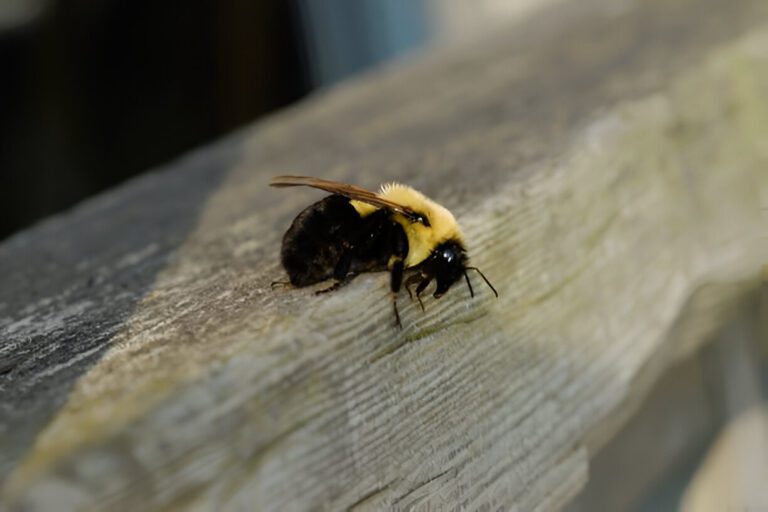
Carpenter bees are large bees known for boring holes into wood to build nests, which can lead to structural damage over time. Unlike other bees, they don’t live in hives but create tunnels in wood for their offspring. While generally non-aggressive, their burrowing habits can result in costly repairs if left untreated. Carpenter bees are commonly found in wooden homes and decks, making them a significant pest for many homeowners in Brampton, ON, Canada.
Carpenter bees are frequently encountered in Brampton and nearby regions, particularly in areas with older wooden homes or outdoor structures. They prefer untreated wood for nesting, making homes and businesses in the area susceptible to infestations.
Signs of a carpenter bee infestation include small, round holes in wooden surfaces, piles of sawdust beneath these holes, and the presence of large, black-and-yellow bees hovering around wooden structures. These bees are most active in spring and early summer, making it crucial to monitor wooden areas for damage during these months.
Carpenter bee control involves sealing entry holes with wood putty or caulk and applying insecticide to nesting areas. Professional pest control services may use specialized equipment to ensure the complete removal of carpenter bees and prevent future infestations. It's important to treat both the nest and the larvae to fully eliminate the problem.
Eliminating carpenter bees may take 1-2 weeks depending on the severity of the infestation. It's essential to act quickly before the bees expand their burrows and cause more extensive damage to your property.
Only female carpenter bees can sting, but they generally don’t unless provoked.
Look for small, round holes in wood, piles of sawdust, and buzzing bees near wooden structures.
While they’re not aggressive, their boring can cause structural damage to wooden areas of your home.
Seal and paint exposed wood, and repair any damaged wood promptly.
Yes, but it’s essential to remove the bees and seal the holes to prevent further damage.
Field Description Color Light yellow to brown Size 2 to 2.5 mm Shape Small and slender Larvae Appearance White, legless,

Feature Details Color Reddish-brown with a yellowish margin behind the head Size Up to 53mm (2 inches) Shape Oval, flat

Characteristic Details Color Light brown with two dark stripes Size 12 a 16 mm Shape Oval, flat body Larvae